
How Do Biometric Scanners Work?
Biometric scanners authenticate identity by capturing a unique physical or behavioural trait and converting it into a mathematical template that is stored securely and typically encrypted. Whether scanning a fingerprint, face, or iris, the underlying process follows the same four stages: capture, feature extraction, template creation, and comparison.
The Four-Step Scanning Process
Capture
A specialised sensor reads the user’s physical characteristic using technology matched to the trait being measured, whether a camera, a light sensor, or an electrical capacitor. The quality of the capture at this stage directly affects the accuracy of everything that follows.
Feature Extraction
Algorithms filter out background noise and map the anchor points that define each trait, such as ridge endings and bifurcations in fingerprints or nodal points on a face. These anchor points are what make each biometric profile distinct and difficult to replicate.
Template Creation
The extracted features are converted into an encrypted numerical code known as a biometric template. The original image is not stored; only the mathematical representation is retained, an important distinction for data privacy and PDPA compliance.
Comparison and Authentication Decision
When a user presents their trait, the system generates a fresh template and compares it against the stored version from enrolment. If the two match within an acceptable threshold, access is granted. Accuracy is measured by two metrics: False Acceptance Rate (FAR), which tracks how often an unauthorised user is incorrectly admitted, and False Rejection Rate (FRR), which tracks how often a legitimate user is incorrectly denied.
Common Biometric Technologies
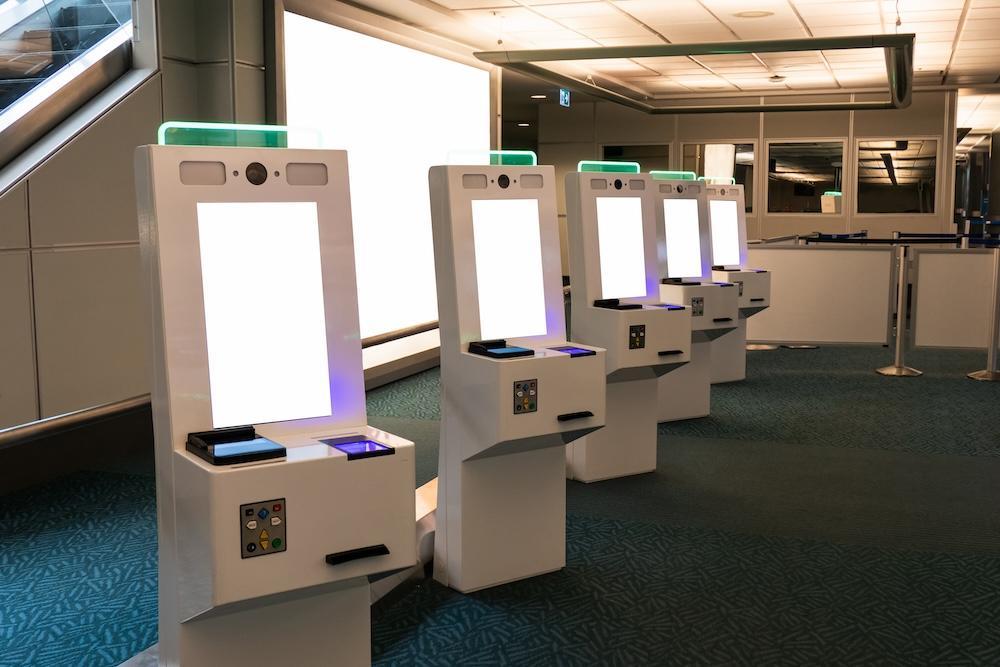
- Optical Fingerprint Scanners: A light source and lens capture a digital photograph of the finger’s ridges and valleys. Widely deployed in commercial access control for their reliability and cost-effectiveness.
- Capacitive Fingerprint Scanners: Tiny electrical capacitors detect ridge patterns through variations in charge on contact, making this fingerprint scanner type more resistant to spoofing and contamination than optical models.
- Ultrasonic Fingerprint Scanners: High-frequency sound waves penetrate the skin to map three-dimensional finger topography. This is the most secure biometric fingerprint method and the hardest to defeat with photographs or silicone replicas.
- Facial Recognition Scanners: Infrared cameras and depth sensors map facial geometry by measuring distances between features such as the eyes, nose, and jawline. Contactless operation makes facial recognition well suited to high-traffic environments such as hospitals, data centres, and corporate lobbies.
- Biometric Iris Scanners: Near-infrared light captures the ring patterns in the coloured portion of the eye. Iris recognition is considered one of the most accurate modalities because iris patterns remain unique even between identical twins.
Can a Fingerprint Scanner Be Fooled?
Spoofing attempts using gelatin replicas, silicone moulds, or photographs remain a known risk, though modern biometric scanners have raised the bar considerably. Optical scanners are the most susceptible; capacitive models require physical pressure and skin conductivity to register, and ultrasonic scanners are the hardest to fool. Enterprise-grade systems counter these methods with liveness detection, which may include pulse sensing, conductivity checks, or sub-dermal imaging. Most commercial deployments also pair biometrics with a secondary factor such as a PIN or access card, making a spoofing attempt alone insufficient to gain entry.
Is a Biometric Access Control System Right for Your Property?
Biometric access offers stronger identity assurance, greater convenience, and a more complete audit trail than card-based or PIN-based alternatives. The right system depends on your security requirements, traffic volume, budget, and PDPA obligations. Decision-makers asking what are the disadvantages of biometric scanning typically point to three factors: enrolment overhead, sensor maintenance, and stricter data handling requirements under PDPA. These are considerations that shape system selection rather than disqualify the technology.
Sin Chew Alarm provides biometric solutions from fingerprint and facial recognition to fully integrated multi-factor biometric door access systems, each specified after a physical site assessment. Biometric access is most effective when unified with CCTV surveillance, intercoms, and alarms on a single platform, whether for a commercial facility or a residential property where a credential-free home security system is preferred.
Contact our team for a non-obligatory site assessment and biometric access consultation.