
MAC vs RBAC vs DAC: Which Access Control Model Fits Your Security Needs?
In high-security sectors like banking, data centers, and critical infrastructure, access control systems are indispensable for protecting sensitive assets and personnel. To choose the right solution, you must evaluate different access control models based on your specific security needs.
Whether you need the high-security rigidity of MAC, the scalable efficiency of RBAC, or the flexible foundation provided by DAC, you need to determine the ideal fit for your property to ensure optimal protection.
Defining the Three Pillars of Access Management
Physical hardware, such as biometric scanners or card access systems, requires a sophisticated logical framework to function. For facility managers, the challenge lies in balancing between high-level security rigidity and operational flexibility.
By choosing the right system, you can ensure your access control system operates with ease while maintaining strict compliance. And in the security system industry, there are three standard models:
- Mandatory access control (MAC),
- Role-based access control (RBAC)
- Discretionary access control (DAC).
MAC vs RBAC vs DAC: A Comparative Breakdown
Since each model offers a unique approach to managing user permissions and system authority, you need to distinguish the difference between mandatory access control, role-based access control, and discretionary access control.
Mandatory Access Control (MAC): The High-Security Standard
MAC is the most restrictive security tier, with access strictly determined by centrally managed security labels, such as “Restricted” or “Top Secret.”
Best For:
- Critical infrastructure and data centers requiring absolute confidentiality.
- High-security environments utilizing a zero-trust architecture.
The Advantage:
- Provides the highest level of protection for fingerprint access control systems.
- Eliminates unauthorized permission changes by ensuring every update requires a central administrator.
- Offers less flexibility compared to RBAC and DAC, making it best suited for specialized facilitieswhere security precedes convenience.
Role-Based Access Control (RBAC): The Scalable Professional Choice
RBAC is a more balanced and scalable choice. Instead of individuals, permissions are tied to job functions. For example, a new hire automatically inherits the access rights associated with their “Facility Manager” role.
Best For:
- Large offices and commercial buildings with high staff turnover or diverse departments.
- Organizations requiring structured oversight across hundreds of users.
The Advantage:
- Simplifies permission management and prevents “privilege creep” in expanding environments.
- Makes it easier to maintain audit trails for a card access system to stay compliant with PDPA data protection standards.
- Compared to MAC, this model offers greater flexibility while maintaining the rigorous structure necessary for professional facility management.
Discretionary Access Control (DAC): The Practical Foundation
Compared to RBAC and MAC, DAC is the least restrictive and most decentralized model. Here, the “owner” of a resource has the full discretion to grant access permissions to others at their own judgment.
Best For:
- Small retail outlets or private offices with a limited number of users.
- Environments where immediate, local control over entry points is a priority.
The Advantage:
- Offers maximum flexibility and ease of use without requiring a complex administrative hierarchy.
- Allows the business owner to personally and quickly manage a single card access system.
However, this flexibility introduces a significant “discretionary risk,” as it is highly vulnerable to human error and unauthorized sharing of permissions compared to more rigid frameworks.
Choosing the Right Model for Your Property
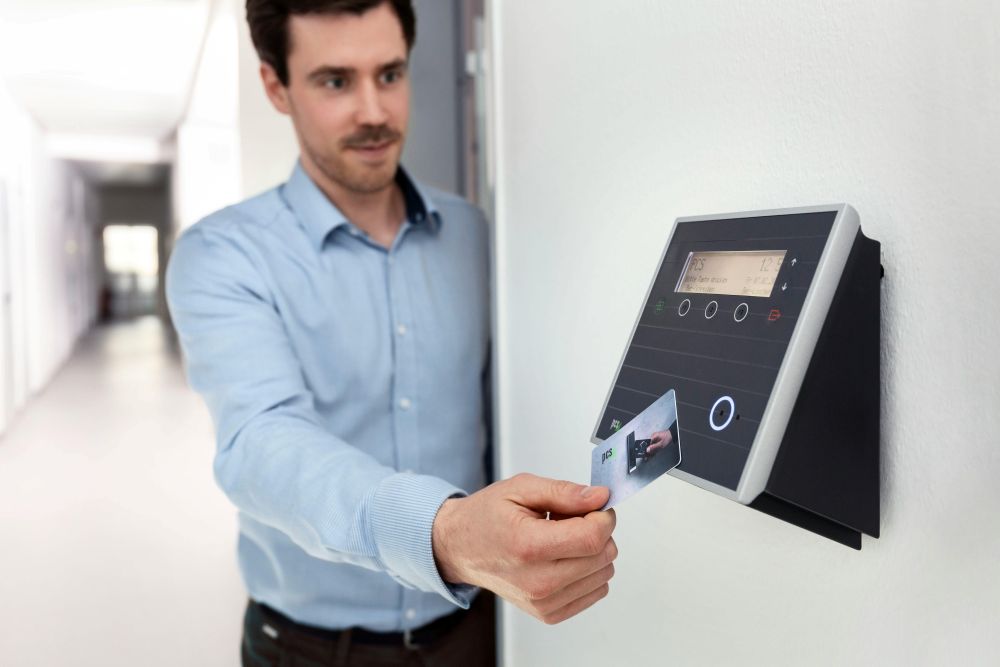
Aside from ensuring security, selecting the appropriate framework helps you comply with the rigorous safety and quality standards in Singapore.
If you’re a commercial developer, for instance, you may find RBAC more beneficial for its administrative efficiency in managing hundreds of diverse tenants and staff members.
In contrast, industrial plants may deploy a hybrid of MAC and RBAC principles. This allows them to utilize the high-security rigidity of MAC for sensitive chemical storage zones while maintaining the scalable flexibility of RBAC for general staff canteens and perimeter entry gates.
The Role of Professional System Integration
Whether you are deploying a fingerprint access control system using Suprema scanners or HID mobile credentials, the software configuration must be sound to prevent system failures.
As such, professional integration is vital to ensure that the control settings are hardened against both cyber and physical breaches through expert calibration.
And at Sin Chew Alarm, MAC, RBAC, and DAC are the frameworks inside our integrated security systems.
Securing Your Legacy with Expert Access Control
While MAC, RBAC, and DAC all offer protection, the ideal model is the one that aligns with your facility’s daily traffic and specific risk levels.
You also need a professional assessment to ensure that you choose the right access control system for your needs.
When you choose Sin Chew Alarm, you can expect the engineered precision needed to deploy these complex logical systems across various industries. At the same time, we offer reliable security system maintenance to help you remain compliant with regulations while keeping your property secure.
Whether you need an access control or security alarm system, contact Sin Chew Alarm for a detailed risk analysis and a tailored proposal to ensure the best protection for your premises.